How much should I charge for dog walking?
Charge at least what the walk is worth where you work: local wages for your time, plus travel, driving and the costs an employer would cover. For a 30-minute walk near Ashburn, VA, that's $24. Enter your ZIP code to see yours.
Example: Ashburn, VA · 30-minute walk
Don't charge less than $24
$22–$27 across local wages
- Your areaWashington-Arlington-Alexandria, DC-VA-MD-WV
- $24
- VirginiaStatewide wages
- $22
- United StatesNationwide wages
- $22
That's $35 for each hour of your time, travel included.
Change the assumptions
No government data measures these, so they are our assumptions. Some of a walker's working time goes on messages, invoices and gaps between walks, so we count about three in four working hours as paid. Driving is at the IRS rate of 76 cents a mile.
Turn your price into a price sheet you can print.
A flyer, a price sheet, a service agreement and an intake form, with your business name and prices in. Free for your email address.
Get the free starter kitHow is this price worked out?
We start from what employers near you pay animal caretakers an hour (BLS, May 2025): the 25th percentile, the median and the 75th percentile. We multiply by 1.30 for the payroll taxes, paid leave and insurance an employer pays on top of wages (BLS, June 2026), and add driving at the IRS rate of 76 cents a mile. Three figures are our assumptions, which you can change under Change the assumptions: 10 minutes of travel and 3 miles of driving a walk, and about three in four working hours paid. That gives a floor worked out from wages. We have no survey of what walkers charge.
Sources: BLS wages, May 2025 · BLS employer costs, June 2026 · Census ZIP code areas · IRS mileage rate

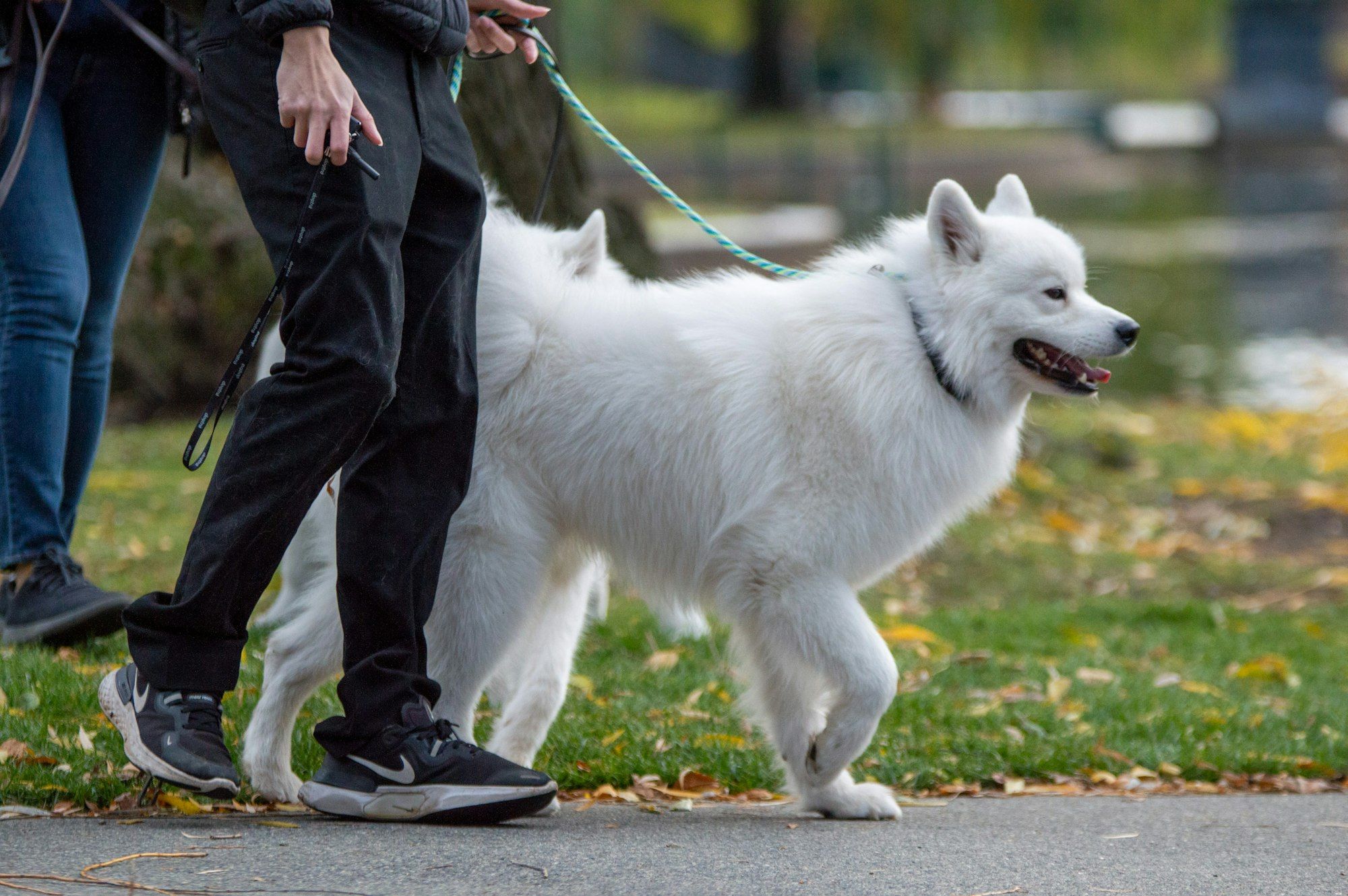
Photo: Vitaly Gariev on Unsplash
Will $24 a walk pay you? Check your week
Your 30-minute walk starts at your area's floor, $24. Change it to what you charge, then put in the income you want, your hours and your other services.
What do you charge for each walk?
Clients pay by the length of the walk, and each length has a ceiling: a 20-minute walk priced far above what other walkers nearby ask is hard to sell. Put in what you charge for each service and how many you can book a week. The walk from your ZIP lookup starts at your area's floor. The planner works out your year from there.
That's 8 services, the most the planner takes.
The walk the same length as your ZIP lookup starts at your area's floor; the other prices are examples. Change any of them to what you charge. An add-on is done at a visit you already make, so it adds no travel or miles. Each dog on a walk pays the walk's price, and counts as a booking.
Between visits I travel minutes and drive miles, at $ a mile. I walk dogs at a time. Insurance costs me $ a year, and supplies and the rest $ a month.
Your plan earns $49,195 a year before income tax, in 30.3 of your 35 hours a week.
How do you close the gap to your earnings target?
A single price high enough to reach your target can be hard to hold when clients compare walkers nearby. You close the gap with more paid time in your week: more visits, two dogs on a walk, add-ons like nail trims, longer walks, a modest raise, a tighter route, or a helper. Below, each is sized to your plan.
Plan with , paid $ a visit, taking more walks a week from new clients.
The helper's pay starts as an example: set what you'd pay. Whether a helper is an employee or a contractor depends on how much you direct and control the work. Read the IRS guidance on contractors and employees and your state's rules before you hire.
You're $10,805 a year short. Each of these closes or narrows it, sized to your numbers:
- Drop-in visit: 12 more a weekAdds $11,359 a year, but needs 1.4 more hours a week than you have.
- 30-minute walk: two dogs together on 10 a weekAdds $11,520 a year, if both dogs live on your route and get along.
- Nail trim (add-on): 16 more a week at $15Adds $11,520 a year.
- 20-minute walk to 30-minute walk: switch 10 a weekAdds $1,920 a year.
- 30-minute walk: raise from $24 to $27Adds $3,600 a year, if $27 is still within what walkers near you charge.
- Travel between visits: cut from 10 to 5 minutesBooking clients close together frees 3.8 hours a week. Filled with Drop-in visit, 9 more a week, that adds $8,519 a year.
Walk dogs together only if both live on your route and get along, and where local rules and your insurance allow it. Otherwise the extra pickups add time and miles.
What does a week of dog walking earn?
With the 30-minute walk at the example's floor, $24, and the other example prices, 45 visits and 2 nail trims a week bring in $1,140. Over 48 weeks that's $54,720. Take off $4,925 of driving at the IRS rate and $600 of supplies, and you keep $49,195 before income tax, in 30.3 hours a week including travel.
| Line | Amount |
|---|---|
| Revenue a week | $1,140 |
| Driving a week: 45 visits × 3 miles × $0.76 | $102.60 |
| Revenue a year: 48 weeks | $54,720 |
| Driving a year | $4,925 |
| Insurance, your own quote, and supplies at $50 a month | $600 |
| Earnings before income tax | $49,195 |
| Hours a week, with 10 minutes between visits | 30.3 |
What else can a dog walker offer to earn more?
A higher price for the same walk only goes so far, so grow by selling more of your week. Fill the hours clients want, add services that fit around your walks, charge more for the awkward slots, and steady your income with plans billed monthly. When your week is full, a helper lets you take on more clients.
- Packages and membershipsSell a weekly walk plan billed monthly. Your income gets steadier, and clients stop deciding visit by visit.
- Weekend, holiday and short-notice ratesCharge more for the slots that cost you most, and put the rates on your price sheet so nobody is surprised.
- A multi-pet rateSet an extra amount for a second dog from the same home on the same visit.
- Overnight stays and house sittingA night in a client's home pays more than a walk and fits around a day of walks.
- Puppy and senior visitsLunchtime potty breaks for puppies, and medication and company for older dogs.
- Pet taxiDrive dogs to the vet or the groomer, priced by the trip, with your miles counted.
- A cancellation policyCharge for late cancellations so a lost slot still pays. Put the cutoff in your service agreement.
- A raise once a yearGive clients a month's notice in writing, so your prices keep up with your costs.
- Referral thanksThank a client who sends you a new one with a free walk or a discount.
- Groomers, vets and trainersSwap referrals with the people your clients already trust with their dogs.
- Midday, and early and late slotsMany clients want a walk midday, while they're at work. Fill those hours first, then offer early-morning and evening slots to the clients who need them.
- A specialtyReactive dogs and large breeds take skill and care. Charge a higher rate for them.
- A helper or a second walkerWhen your week is full, a helper can walk for new clients. The plan above shows what that adds.
Why is a national average a poor guide to your rate?
A national figure averages big cities with small towns and short walks with long ones. It can't know your driving, your insurance or how many walks fit in your day, and a rate built on it can leave you working for less than you think. Use an average as a rough check at most.
The Bureau of Labor Statistics puts the median wage for animal caretakers at $35,360 a year, in May 2025. That's a wage an employer pays its staff. Working for yourself, you pay your costs and self-employment tax out of what clients pay you, so the same yearly figure takes more than the wage suggests.
The ZIP card at the top starts from the wage where you work instead, and adds what working for yourself costs on top.
What costs should a dog walker count?
Count everything the business pays for in a year: the miles you drive between visits, liability insurance and any bond, leashes, bags and treats, your phone, and any apps or booking fees. The planner also counts the travel time between visits against your hours, because nobody pays you for it.
- Driving between visits, at the IRS rate or your real car costs
- Liability insurance, and a bond if you have one
- Leashes, poop bags, treats and towels
- Your phone and any apps or fees you pay
Insurance prices depend on your state, your services and the insurer, so the planner leaves insurance at $0 for you to add your own quote. It's a real cost: get quotes from more than one insurer and put the yearly figure in.
How much does driving cost a dog walker?
The IRS standard mileage rate for business driving is 76 cents a mile from July 1, 2026, up from 72.5 cents earlier in the year. The IRS bases it on a yearly study of the fixed and variable costs of running a car. At 3 miles a visit, that's $2.28 of driving on every visit.
Over a year, the example plan drives $4,925 of costs, its biggest. If you walk between clients, set the miles to 0.
The IRS also lets you use your actual car costs instead of the standard rate. A tax preparer can tell you which suits you.
What do you do once you have a plan?
Write your prices down with your extras, such as a second dog, holidays and late cancellations, so you quote the same price every time. Keep each walk at or above your area's floor, and look at a few local walkers' listings before you settle on a price. If you're on Rover now, work out what you keep there too, because the price on your profile isn't it.
The Rover fee calculator shows what Rover takes from each walk, by month and by year.
The guide to starting a dog walking business covers the rest of going independent: registering, taxes, insurance and finding clients.
The free starter kit has a price sheet you can fill in with your prices and your extras.
How much do dog walkers charge per walk?
It depends on where you work and how long the walk is, and we have no survey of what walkers charge, so we don't quote a figure. What we can work out is the least a walk is worth near you. For a 30-minute walk near Ashburn, VA, that's $24. Enter your ZIP code above to see yours.
Is this what other walkers near me charge?
No. The figures come from what employers near you pay animal caretakers, plus your travel, your driving and the costs an employer pays on top of wages. They show the least a walk should cost. Walkers near you may charge more, so look at a few local listings before you set your price above the floor.
Does the floor cover self-employment tax?
Partly. The ×1.30 comes from what private employers pay for service jobs on top of wages, per hour worked (BLS, June 2026). It includes the employer's half of Social Security and Medicare, which you pay yourself as self-employment tax, plus paid leave and insurance. Your income tax isn't in the floor.
Why count only three in four working hours as paid?
Replying to clients, meeting new ones, sending invoices and the gaps between walks all take time no client pays for. No government source measures how much, so three in four is our assumption. If your week runs differently, change it under Change the assumptions.
Why doesn't the calculator just give me one price?
The ZIP card gives the least to charge for one walk where you work. A year is more than one walk, so the planner under it checks whether your prices and the walks you can book reach the income you want. If they don't, it sizes more walks, add-ons, group walks or a helper against the gap.
Does the plan cover taxes?
No. Your earnings are before income tax. Self-employed, you pay income tax and self-employment tax, so set a target that leaves room for both, or ask a tax preparer how much to put aside.
Can I walk more than one dog at a time?
Yes, if the dogs get along, both live on your route, and your local rules and your insurance allow it. Each dog pays the walk's price, so a pair earns twice as much in the same time. Ask your insurer how many dogs your policy lets you walk at once.
Should a helper be an employee or a contractor?
It depends on how much you direct and control their work, according to the IRS, and your state may have rules of its own. Read the IRS guidance on independent contractors and employees, and ask an accountant before you hire.
Can I deduct the miles I drive between walks?
The IRS sets a standard mileage rate for business driving, and lets you use your actual car costs instead. A tax preparer can tell you what you can deduct. Either way, keep a log of your business miles.
Why is insurance set to $0?
Prices depend on your state, your services and the insurer, and we'd rather not guess yours. Insurance is a real cost: put in your yearly quote and the plan takes it off your earnings.
Where to go from here


Photos: Matt Nelson, Andriyko Podilnyk and Christian Testa on Unsplash
When you have clients of your own, Reeve logs the miles between stops at the IRS rate and builds an invoice from each booking, for a flat $49 a month. It never takes a percentage of your bookings.
Checked on
- IRS: Standard mileage rates
- IRS: Internal Revenue Bulletin 2026-29 (Announcement 2026-11, rates from July 1, 2026)
- IRS: 2026 business standard mileage rate (IR-2025-128)
- IRS: Self-employed individuals tax center
- IRS: Independent contractor (self-employed) or employee?
- BLS: Animal care and service workers (Occupational Outlook Handbook)
- BLS: Occupational Employment and Wage Statistics, May 2025, Animal Caretakers (39-2021), released May 15, 2026
- BLS: Occupational Employment and Wages, May 2025 (news release and technical note)
- BLS: OEWS area definitions, May 2025 (county to wage area)
- BLS: Employer Costs for Employee Compensation, June 2026, Table 4 (service occupations), released September 9, 2026
- Census: 2020 ZIP code tabulation area to county relationship file
- Census: 2022 Connecticut county subdivision to ZIP code tabulation area file